Clear sight should not depend on where you live.
We are building a national system so that every Indian with corneal disease is found early, treated close to home and, when needed, receives a transplant without the wait.
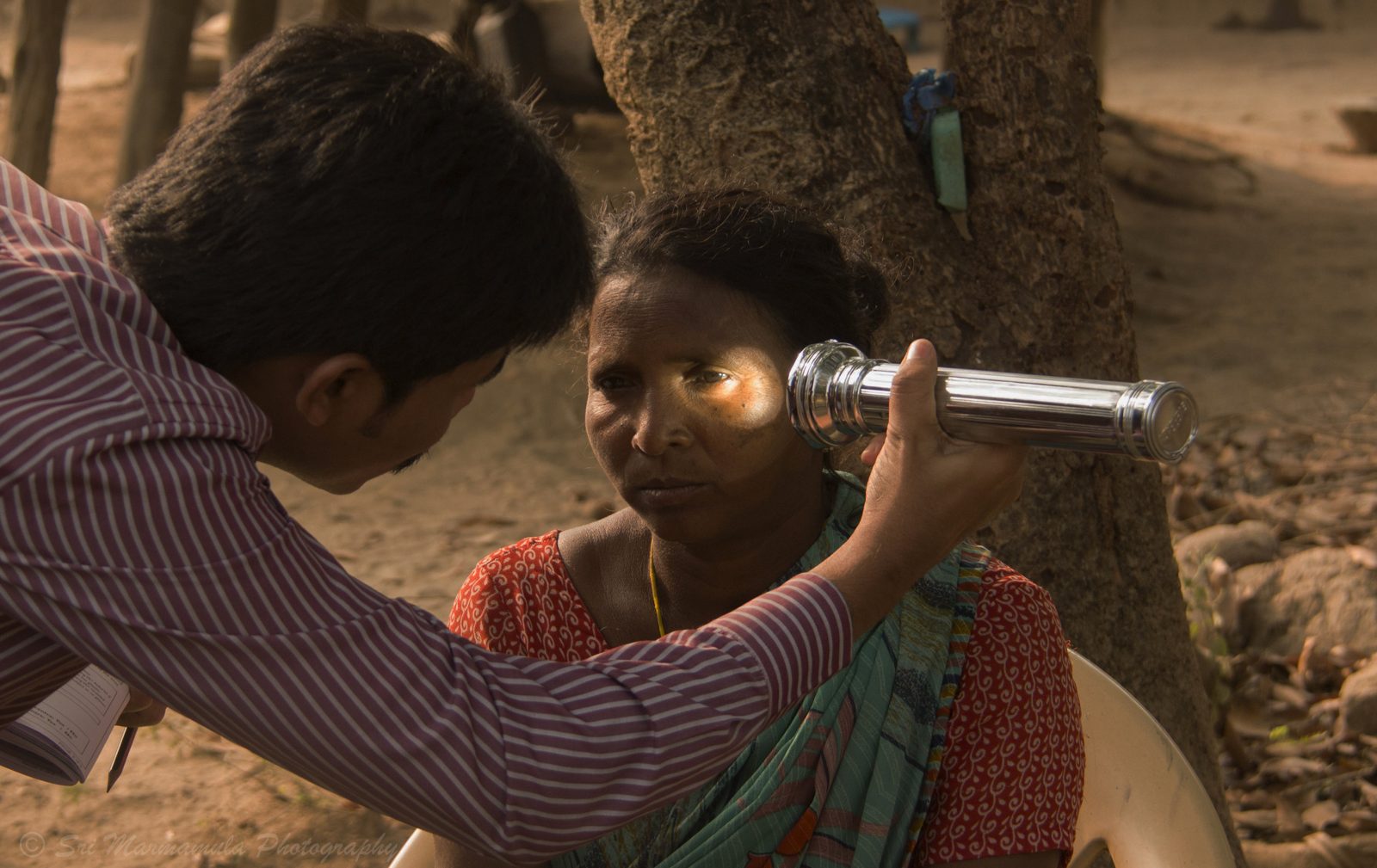
Infosys Foundation is funding UCCM as a decade-long national mission to end avoidable corneal blindness in India.
About the partnership →India has the treatments. Too many people never reach them.
Source: Parihar JKS, Ann Natl Acad Med Sci (India) 2024;60:241–243. Blindness ranking: National Blindness & Visual Impairment Survey 2015–19.
Not a science problem. A delivery problem.
The treatments exist, from antimicrobials and cross-linking to modern transplant surgery. What fails is delivery.
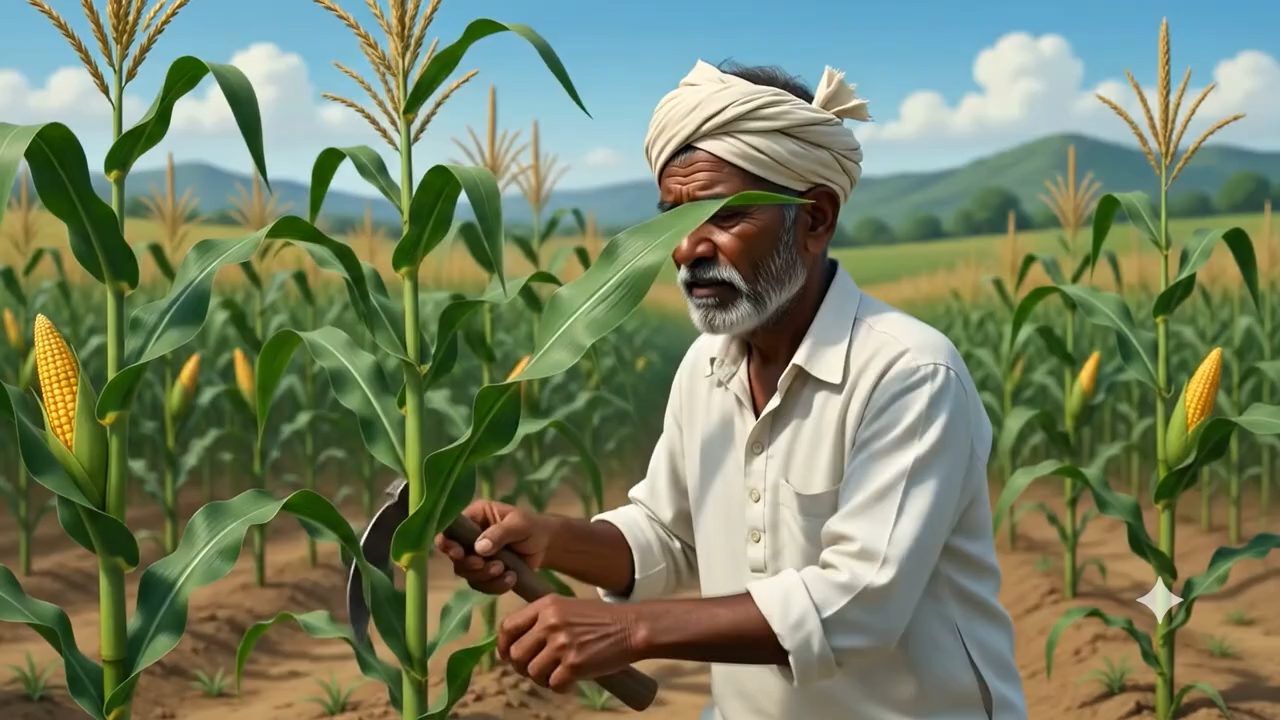
An eye injured in a paddy field reaches a specialist days later, when it can no longer be saved. A donor cornea expires in one city while a surgeon waits for tissue in another. A transplant patient goes home far away and stops coming for follow-up, so rejection is caught too late.
Each of these breaks is a design problem, and design problems can be fixed.
ESTABLISH the universal corneal treatment framework ensuring affordability and accessibility at scale to ELIMINATE the wait for a corneal transplant and CURTAIL avoidable corneal blindness pan-India.
Prevent
Find corneal disease in schools and villages before it blinds, and stop injuries and infections from becoming scars.
Treat
Bring diagnosis, microbiology and specialist opinion to the district, through equipped clinics, tele-ophthalmology and AI-assisted triage.
Transplant
Connect India’s eye banks on SightConnect, one digital platform, so every donated cornea reaches the patient who needs it most.
Train
Build the workforce, from community health workers to cornea surgeons, through a national training programme anchored on Project ECHO.
A cornea donated today can restore sight tomorrow.
One pledge, one conversation with your family, can give two people their sight back.
A national mission against avoidable corneal blindness.
The Universal Cornea Care Mission (UCCM) is run by the UCCM Foundation, a not-for-profit company, together with India’s leading eye care institutions and with Infosys Foundation as its anchor funder.
ESTABLISH the universal corneal treatment framework ensuring affordability and accessibility at scale to ELIMINATE the wait for a corneal transplant and CURTAIL avoidable corneal blindness pan-India.
Corneal blindness strikes young.
Cataract usually blinds people late in life; corneal disease often strikes children and adults of working age, through infections, eye injuries and keratoconus.
So corneal blindness takes far more years of sight than its share of blind people suggests, and a programme that only counts heads will always under-invest in it. Investing in cornea is investing in productive lifetimes.
The burden is also growing: global years of healthy life lost to vision loss rose 81% in three decades, and blindness costs India’s economy an estimated ₹84,500 crore a year.
Sources: GBD 2019 vision loss analyses; Indian J Ophthalmol 2022;70(6):2019–2027.
Build the pipeline, not the tanker.
A water tanker has to run every day. A pipeline is built once and keeps flowing. Camps, standalone clinics and one-off training help the people they reach, but stop when the money stops.
UCCM invests in what keeps working: shared digital platforms, national care protocols, a connected eye banking network, a standing training system, and policy that makes cornea care pay for itself.
- Reduce demand: prevent injuries, infections and late presentation so fewer eyes need a transplant.
- Increase supply: collect more donor corneas and lose fewer of them before they reach a patient.
- Make every graft last: track every transplant patient so rejection is caught early.
Three phases, from proof of concept to a self-sustaining system.
Build
FY2025–26Proof of concept in three states. AI models and software platform built. Mission strategy defined.
Grow
FY2027–30Partner with major eye care institutions to take the programme across India.
Sustain
FY2031–35Partnerships continue and the system moves into sustained, self-financing operation.
Lean at the centre, rooted in partners.
The UCCM Foundation is overseen by a Governing Council. A Programme Director and a Director, Oversight report to the Council. A Chief Operating Officer leads day-to-day operations, supported by a lean secretariat and zonal teams hosted by partner institutions in the North, South, East and West. L V Prasad Eye Institute is the technical partner.
Governing Council: names and affiliations to add
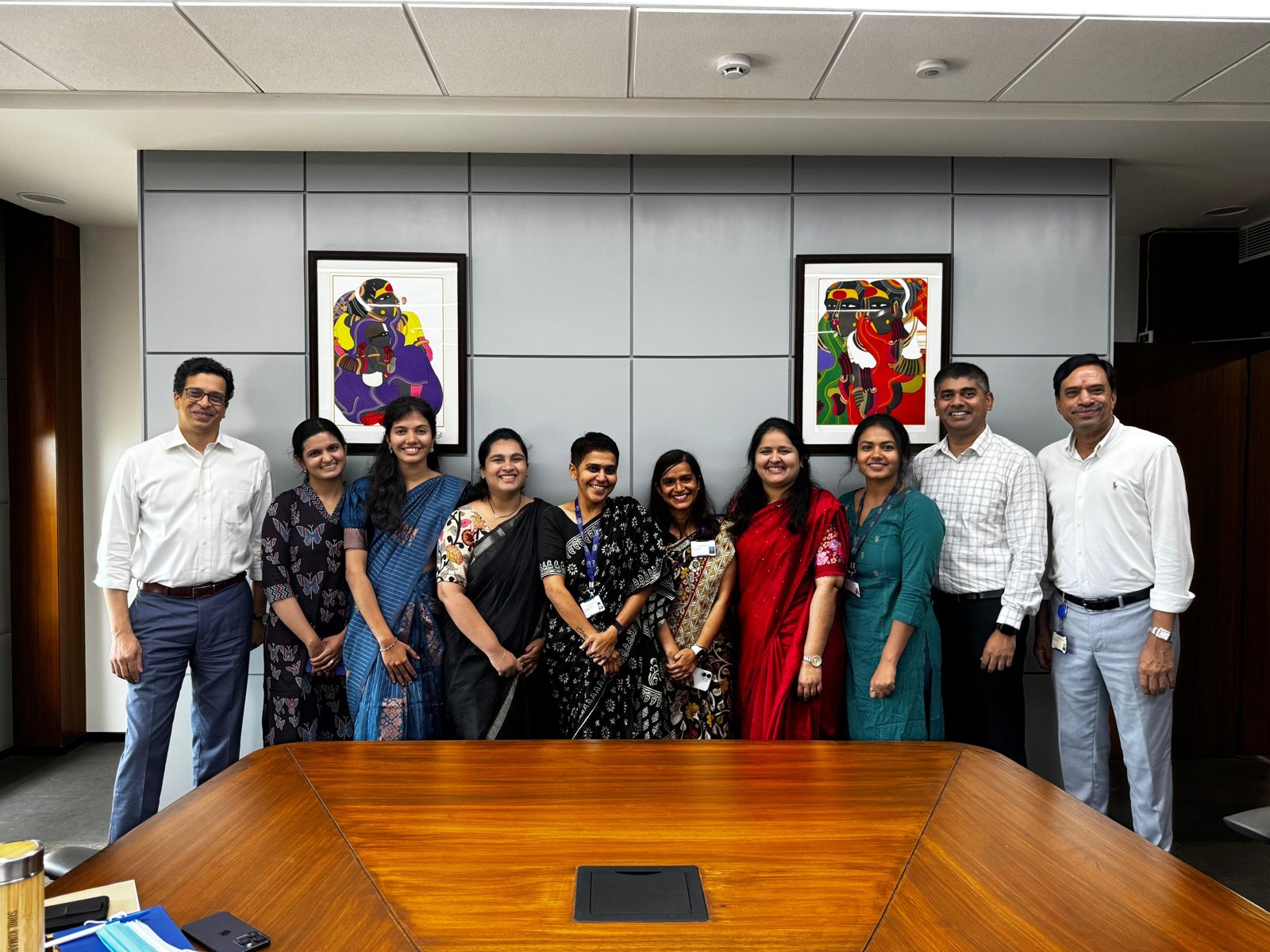
The team leading UCCM.
Infosys Foundation
UCCM is funded by Infosys Foundation. Its support turns care models proven over decades at India’s leading eye institutes into a national mission: no Indian should go blind from a corneal disease that could have been prevented or treated.
Infosys Foundation logo
About Infosys Foundation
Infosys Foundation was set up in 1996 as the philanthropic arm of Infosys. It works in 28 states and 5 union territories, and healthcare is one of its core focus areas. Its stated aim is to “create systemic transformation for generations”, the same idea UCCM is built on.
In 2023 it launched SightConnect, a free app that lets people test their eyes and connect with eye care professionals. SightConnect is now the digital backbone of UCCM’s eye banking network.
Source: Infosys Foundation, About us.
Why this partnership matters
- A decade, not a project. Infosys Foundation is backing a mission long enough to change how India delivers cornea care, not just to fund a few years of activity.
- Systems that last. Its funding goes into what keeps working after the programme ends: shared digital platforms, microbiology labs, connected eye banks, a trained workforce and policy.
- National reach. UCCM’s partner institutions serve districts across India, and mobile vans extend that reach further.
Three goals for India.
Corneal transplants
A transplant for every Indian who needs one, without a long wait.
Patients treated
Many more people with corneal disease treated early and correctly.
New cases of blindness
Fewer people newly blinded by corneal disease each year, through prevention.
Built by people who treat corneal disease every day.
The mission was designed by L V Prasad Eye Institute with Infosys Foundation, in consultation with AIIMS New Delhi, ten of India’s leading cornea institutions, a global cornea expert, public health specialists and epidemiologists.
Quote from Infosys Foundation leadership, with name and title
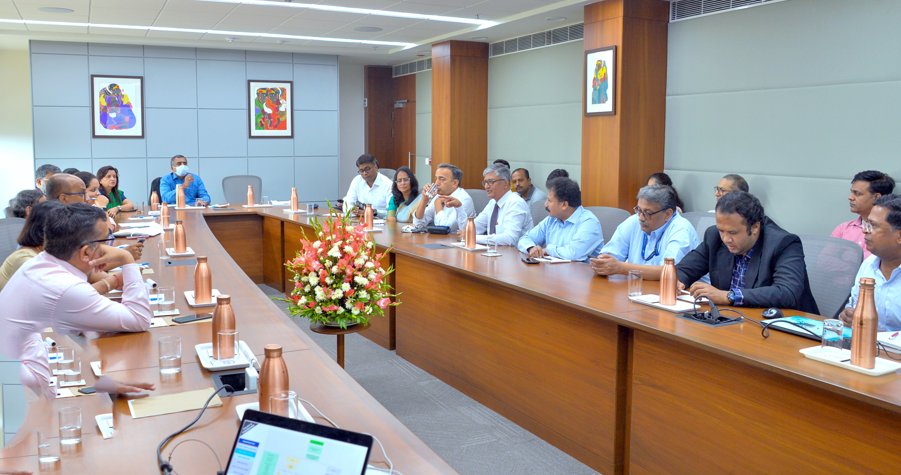
We follow the patient, from first symptom to years after a transplant.
Our work is organised in four tracks, carried by two enablers: digital public infrastructure and a national training system.
Prevent
- School screening
- Community screening
- Population surveys
- Eye donation awareness
Treat
- Microbiology network
- Tele-ophthalmology
- Trauma centres
- AI-assisted triage
Transplant
- SightConnect eye banks
- National distribution
- iPledge donor pledges
- AI donor evaluation
Follow up
- Project Sarathi
- Keratoplasty ChatMate
- Graft specialists near home
Prevention and early detection
Find corneal disease before it blinds.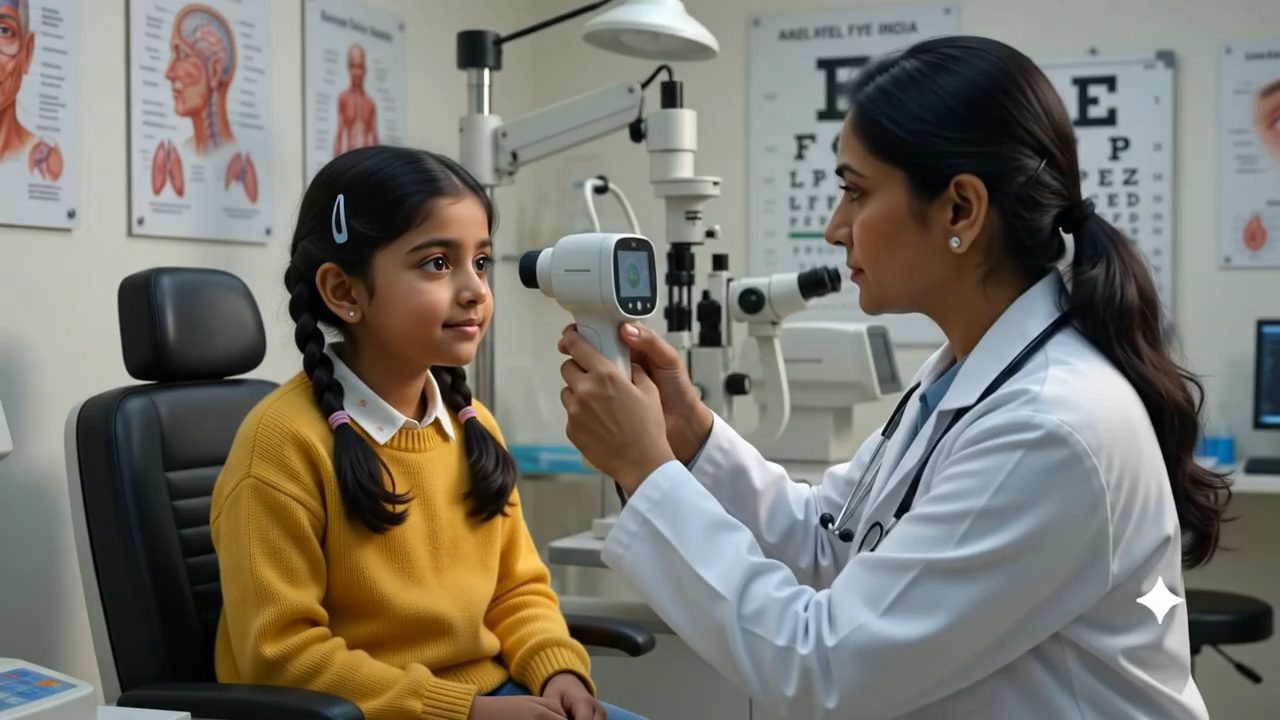
Much corneal blindness starts with preventable trauma, infection or untreated surface disease. We take screening to where people are.
- School eye health screening focused on allergy and keratoconus, using a phone-based keratoconus screening tool and handheld topography.
- Community screening and awareness through trained community health workers, who identify corneal disease, refer, and talk to families about eye donation.
- Population surveys to measure the burden district by district and target prevention where it matters.
School eye health screening
Catch keratoconus while it can still be stopped.Keratoconus makes the cornea thin and cone-shaped. It starts in the early teens and gets worse year by year; many children are diagnosed only after their vision is already damaged. Caught early, a single outpatient procedure called corneal cross-linking can halt it and spare the child a transplant later.
So UCCM takes screening to where the children are.
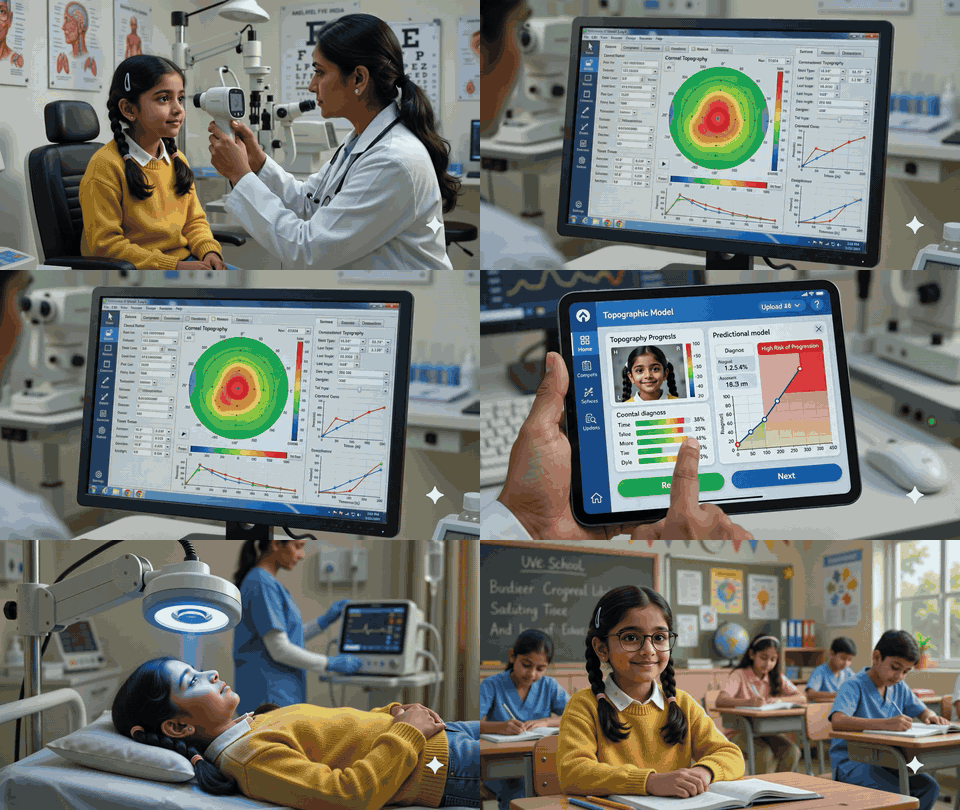
In school
Every child in the class is screened.
Quick checks
Vision, allergy and a phone keratoconus scan.
Topography
The cornea is mapped for at-risk children.
Referral
To the nearest eye centre or mobile van.
Treatment
Glasses, allergy drops or cross-linking.
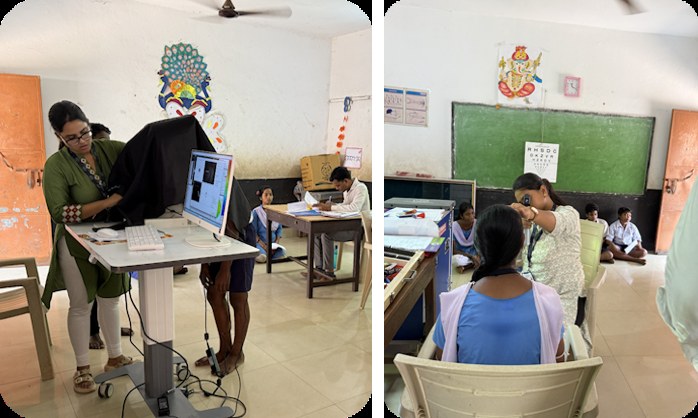
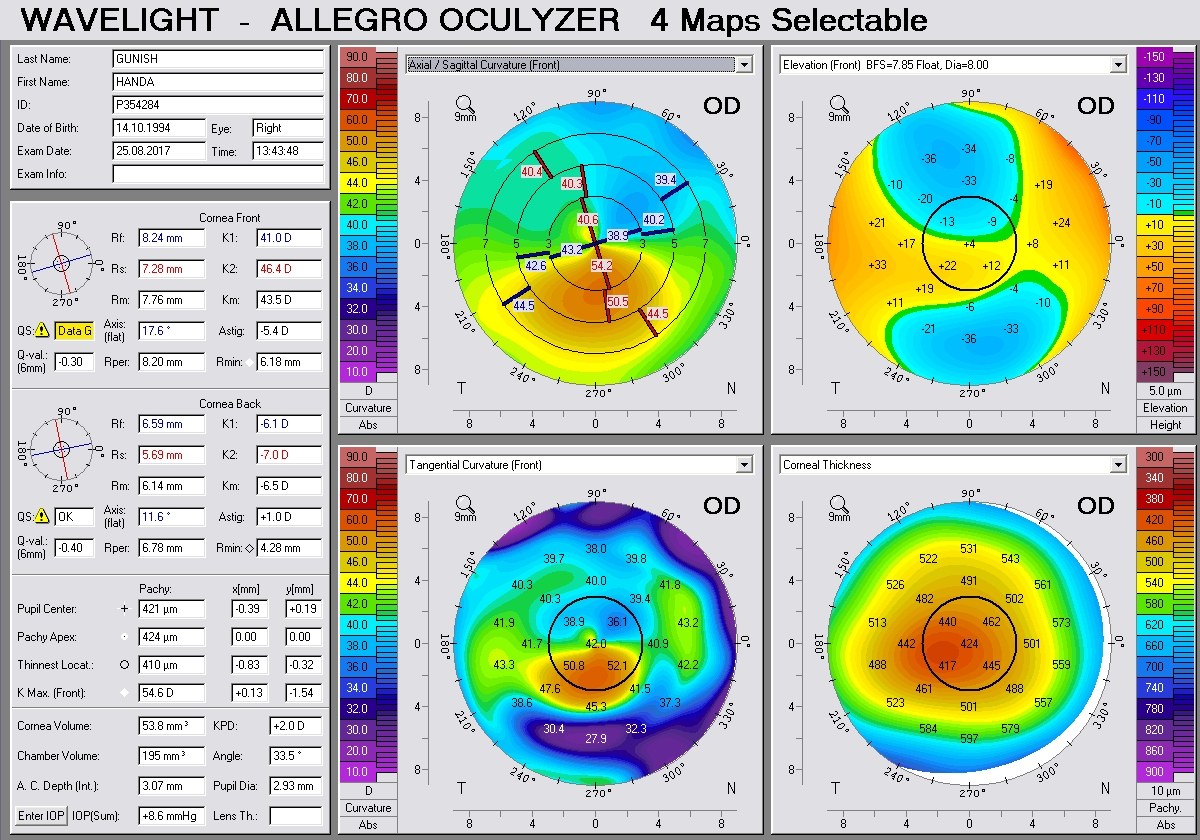
What screening finds
Children who need glasses or treatment for eye allergy, and keratoconus found early, often before the child notices any change in their vision.
Why early matters
Where a corneal transplant was once the only answer, most patients caught early can now be treated with cross-linking and keep their own cornea.
Scaling up
UCCM teams screen children directly, and teachers, trained through district education officials, screen more with the SightConnect app.
Diagnosis and treatment close to home
Treat the right infection, in the first critical week.India sees an estimated 1,50,000 cases of microbial keratitis a year. More than 90% are treated without a lab diagnosis, and about 40% end with a poor outcome.
Sources: Joseph J et al., Cornea 2023;42(7):837–846; Acharya M et al., J Curr Ophthalmol 2020;32(3):249–255.
- Microbiology network: labs at rural and secondary centres linked to central labs and a reading centre.
- Clinical capacity: equipped cornea clinics and operating rooms at partner and district centres.
- Eye trauma centres: surgery centres and trauma clinics so injured eyes are repaired quickly.
- Specialty contact lens centres: scleral lenses that restore vision for many patients who would otherwise need a transplant.
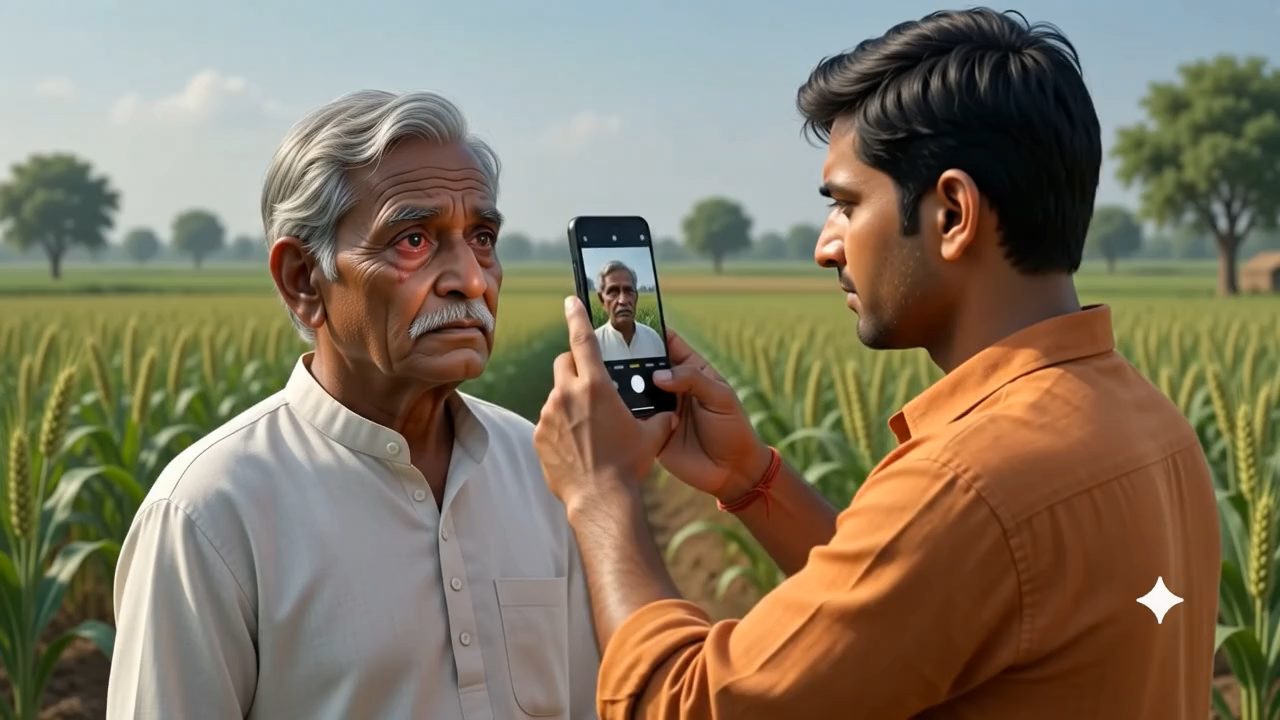
- Tele-ophthalmology, one specialist for every district: a vision technician photographs the eye; AI ranks urgency; a specialist at the hub sends back a plan the same day, on public infrastructure such as eSanjeevani and ABDM.
- AI that clinicians can use: models that help detect corneal infection and tell bacterial from fungal, forecast keratoconus progression and predict graft survival.
Microbiology
The right diagnosis in the first week.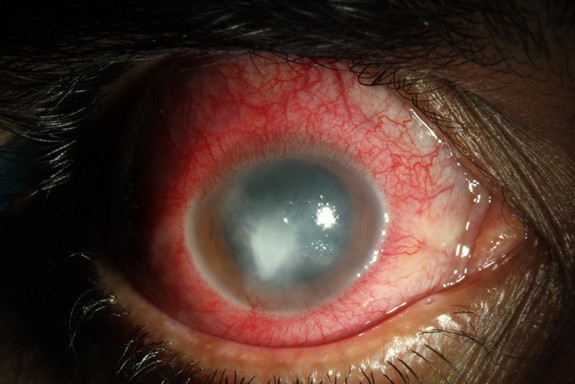
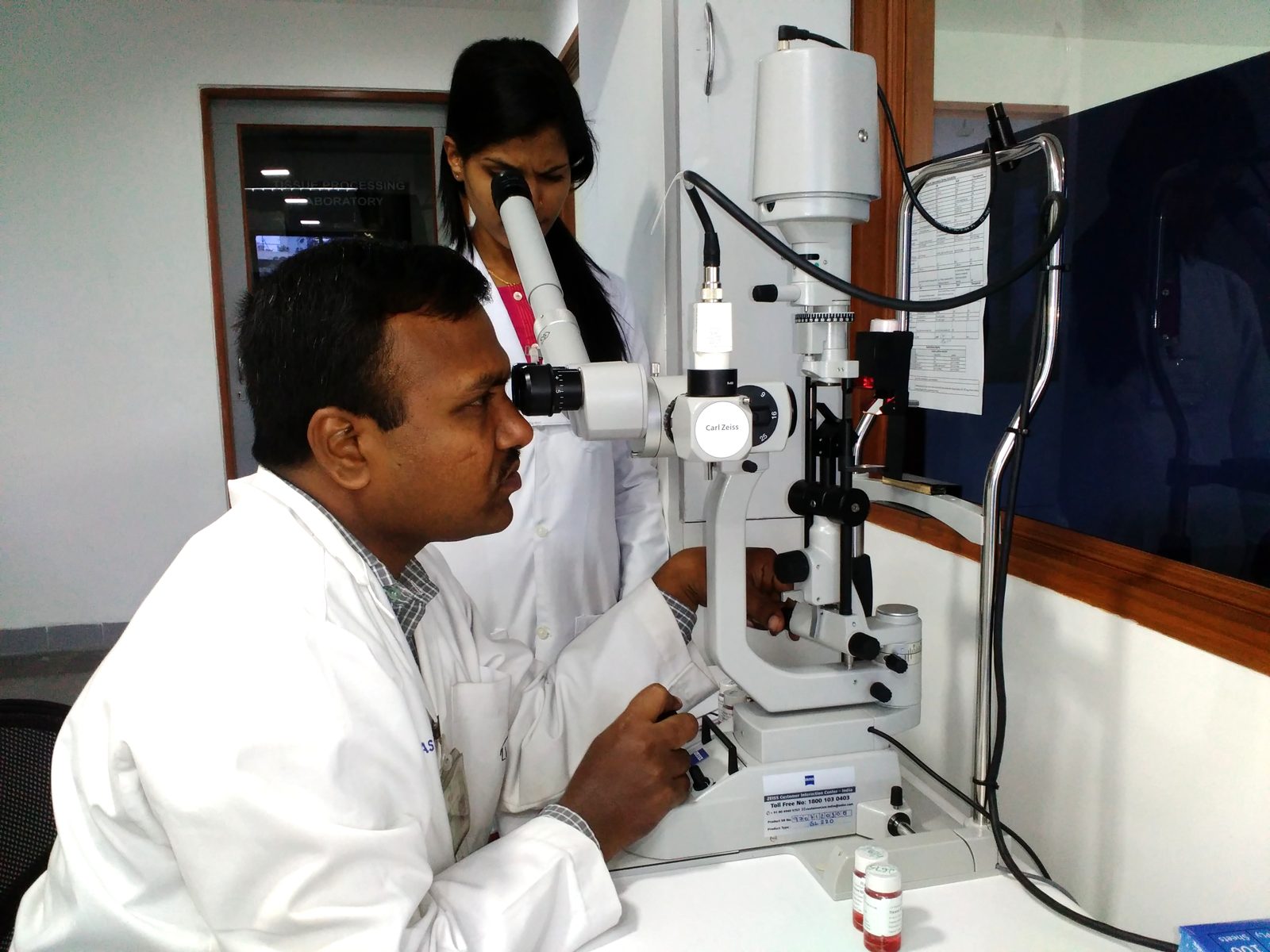
A corneal ulcer can destroy an eye in days, and the treatment depends on the germ: a fungal infection needs an antifungal, a bacterial one an antibiotic. Get it wrong and the eye may be lost.
Yet most corneal infections in India are treated on a guess, because the labs that could identify the germ are in cities, while many infections reach rural eye centres first. UCCM brings the lab to the patient.
Rural eye centre
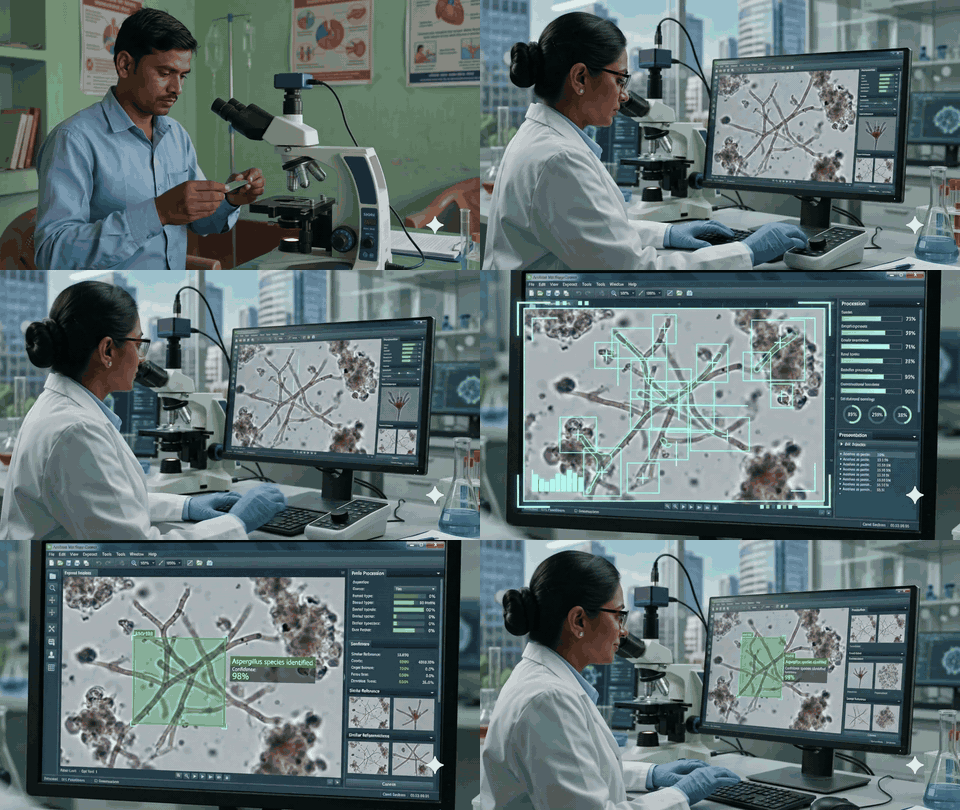
The ulcer is scraped, the smear stained and imaged on the first visit.
Reading centre
A microbiologist reads the smear online and reports within a day.
Microbiology centre
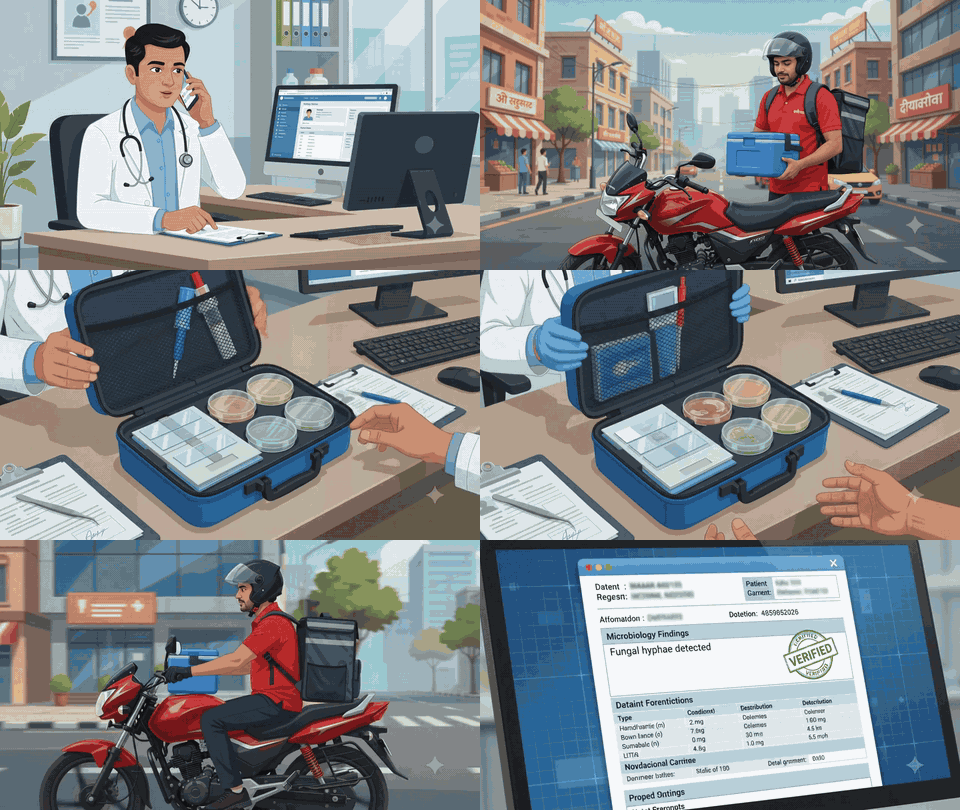
Culture and drug sensitivity for harder cases.
Right treatment
The local doctor starts the correct antifungal or antibiotic.
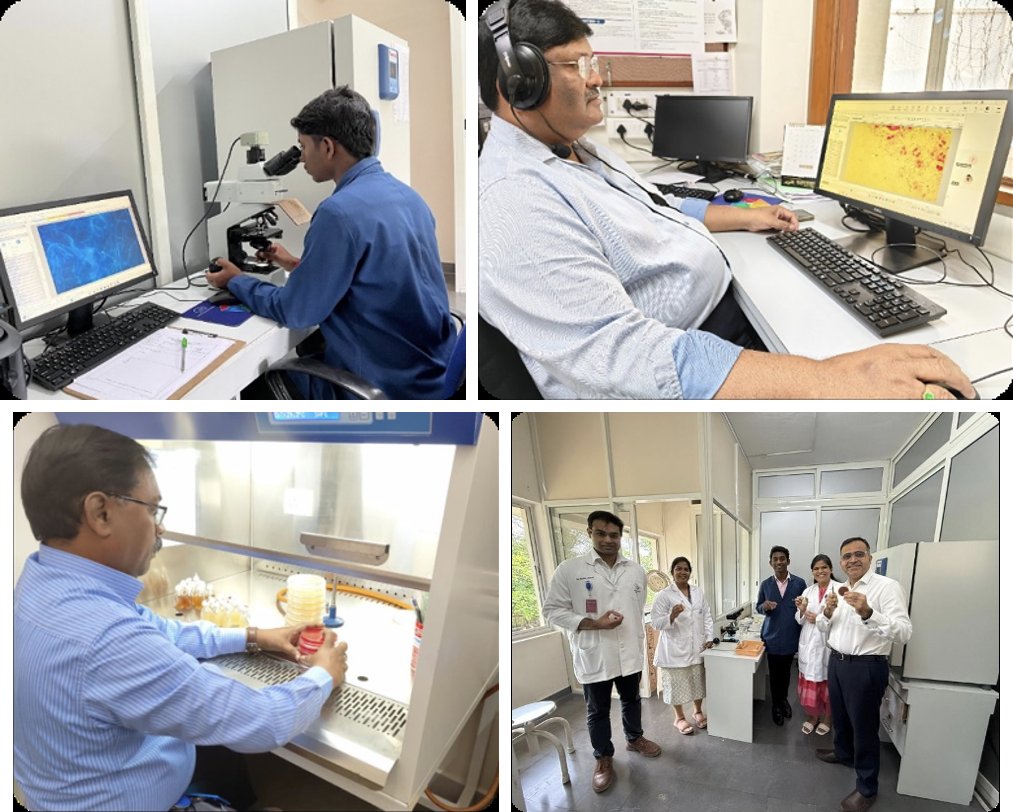
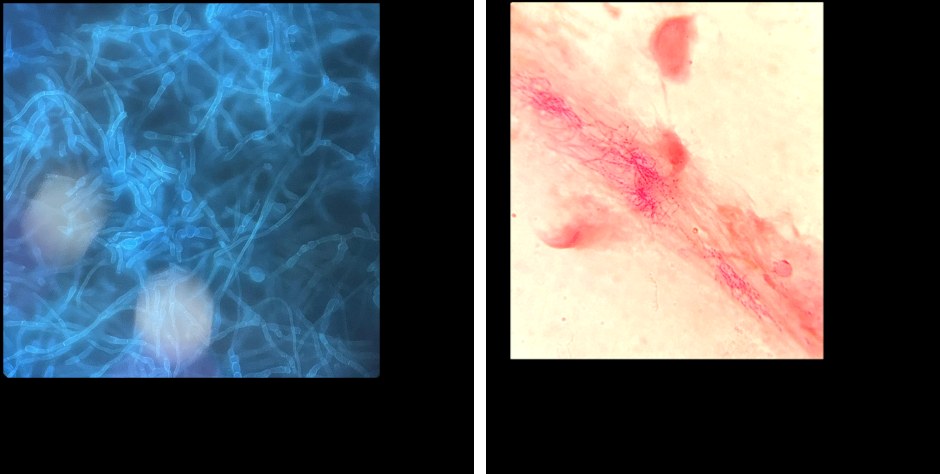
What changes. Where microbiology is set up at rural centres, keratitis patients get a lab diagnosis close to home, start the right drug sooner, and fewer have to travel to a city hospital.
Eye banking and transplants
Make every donated cornea count.India collected 47,676 corneas in 2023 and transplanted 29,057: nearly two in five donated corneas were never used.
Source: Parihar JKS, Ann Natl Acad Med Sci (India) 2024.
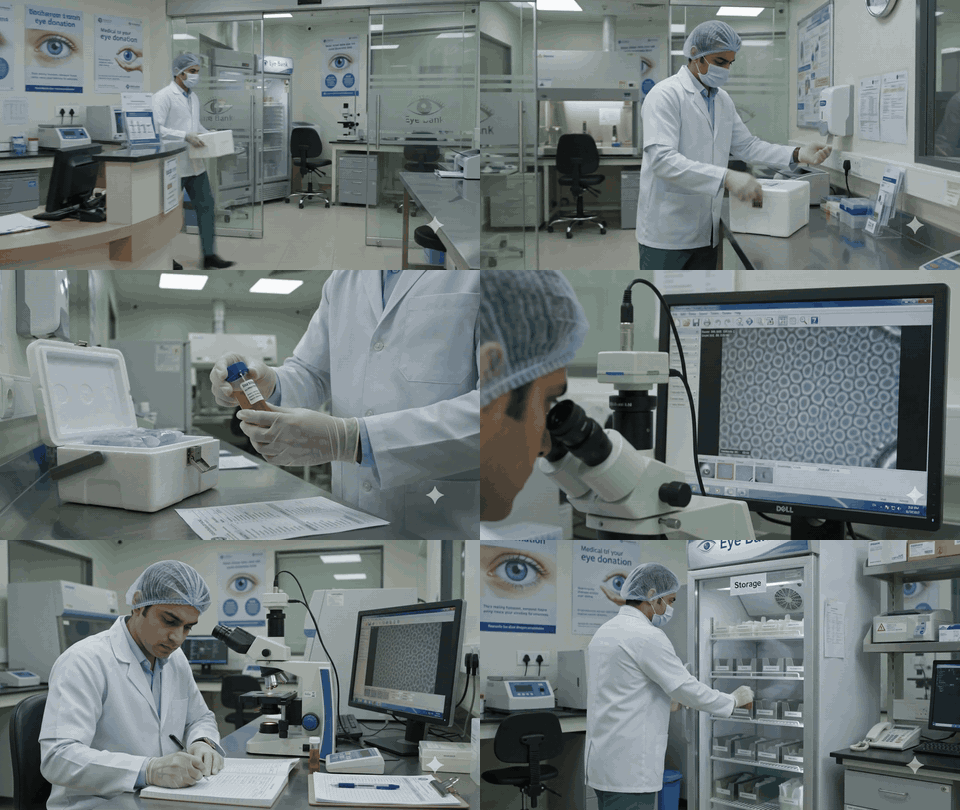
Collection is concentrated in a few large eye banks, while hundreds of smaller ones collect only a few corneas a year. Each bank keeps its own register, so no one outside can see what tissue exists. A surgeon gets a cornea if they know a bank; tissue expires in one city while a patient waits in another.
The scarcity is real, but much of it is a distribution problem. Before India needs more donation drives, it needs every cornea already donated to be visible, graded and placeable, anywhere in the country, before it expires.
SightConnect: one platform from pledge to graft
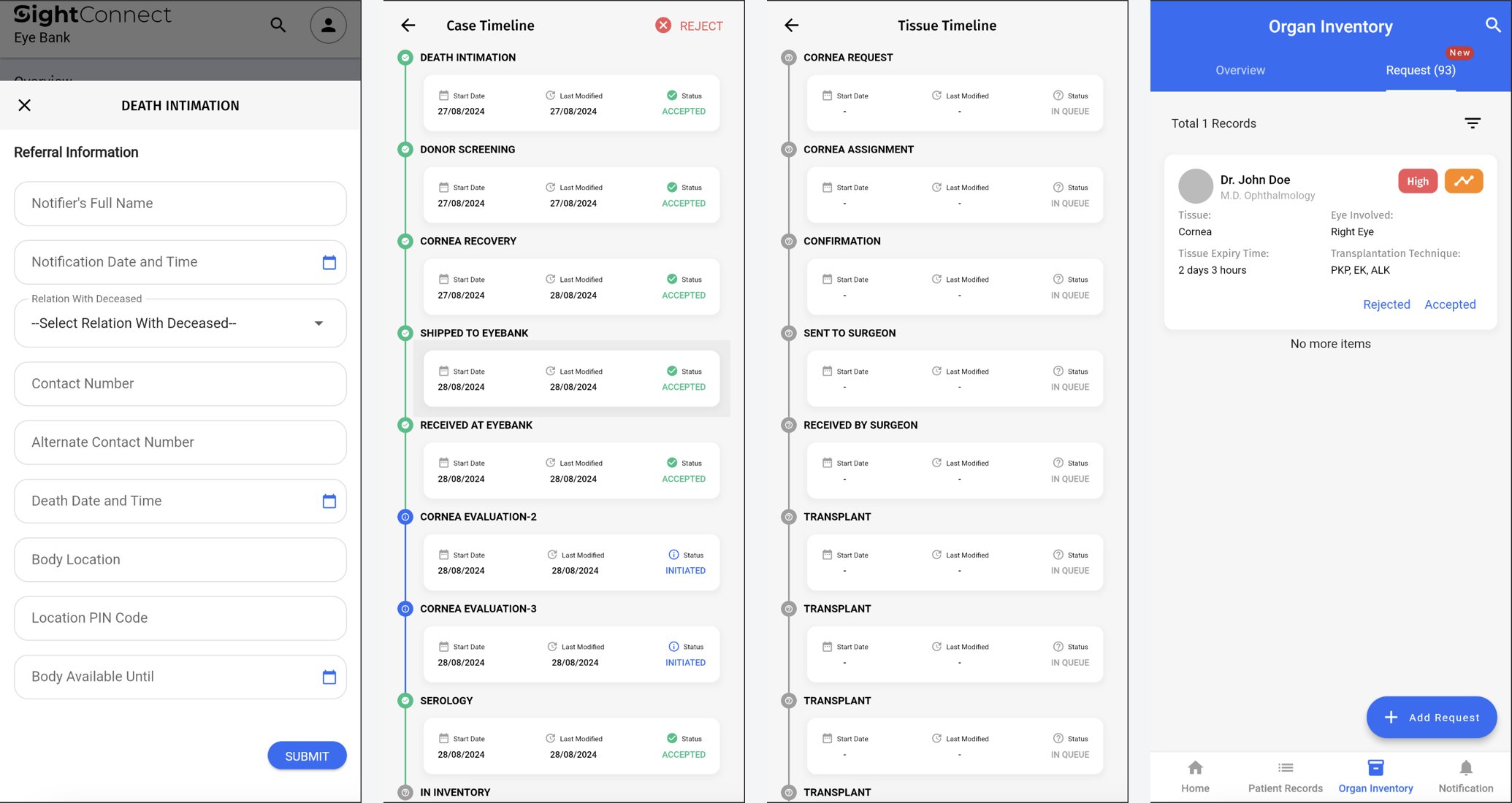
Data moves instantly, tissue moves cold, and the platform keeps them in step.SightConnect is the digital platform that runs UCCM’s eye banking network. Built by L V Prasad Eye Institute with Infosys Foundation, it follows every cornea from the moment someone pledges their eyes to years after a transplant. The order matters: digitise each eye bank, connect the banks, then distribute nationally.
Donate
- iPledge — pledge your eyes online, in the app or by QR code, linked to your local eye bank
- Counselling — trained eye donation counsellors in hospitals help families say yes
Collect and assess
- Eye collection — consent, retrieval and serology recorded once, at source
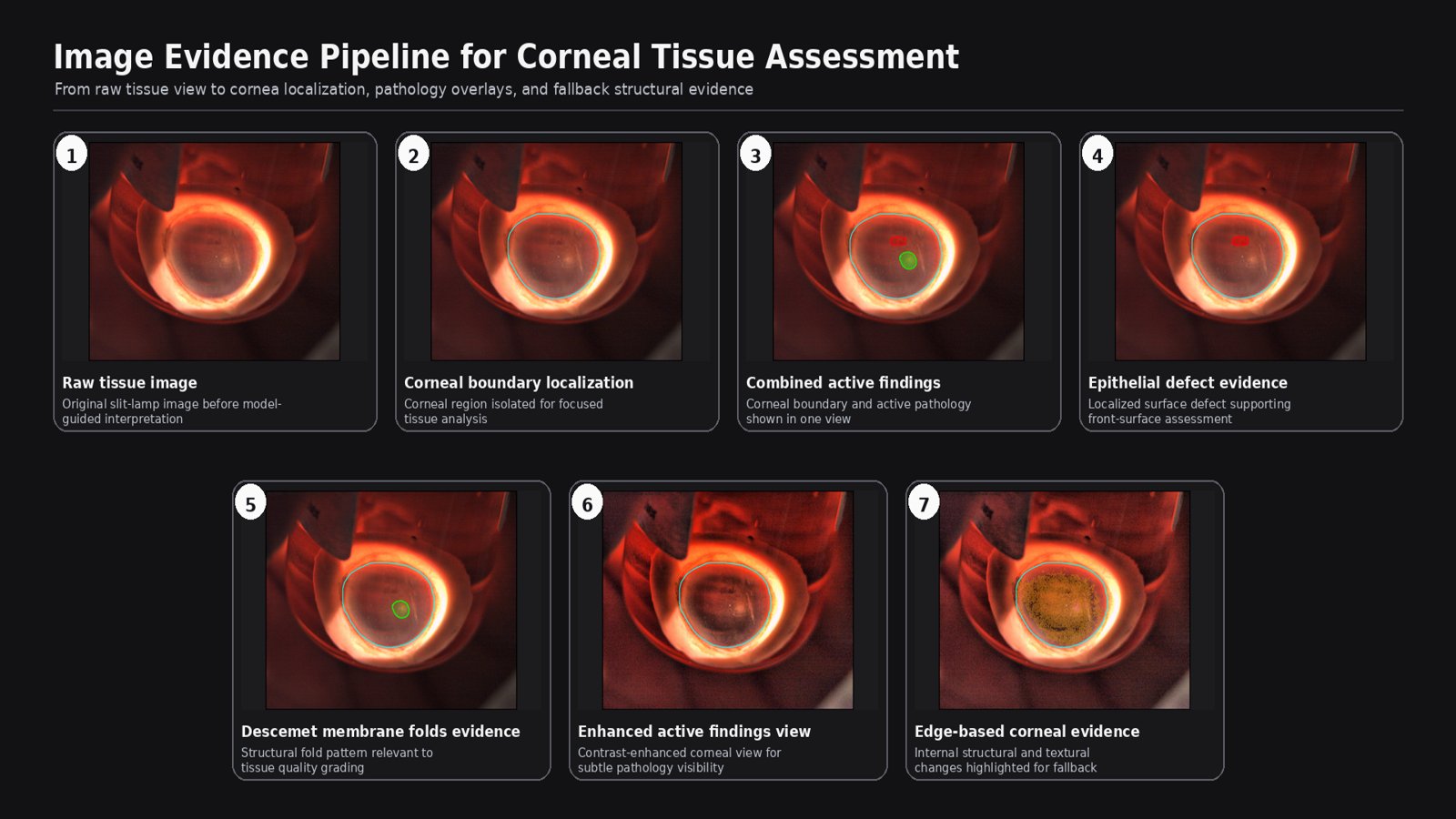
- Cornea processing — grading, cell counts and slit-lamp images in a common format
- AI donor evaluation — helps judge tissue quality so more corneas are usable
Match and distribute
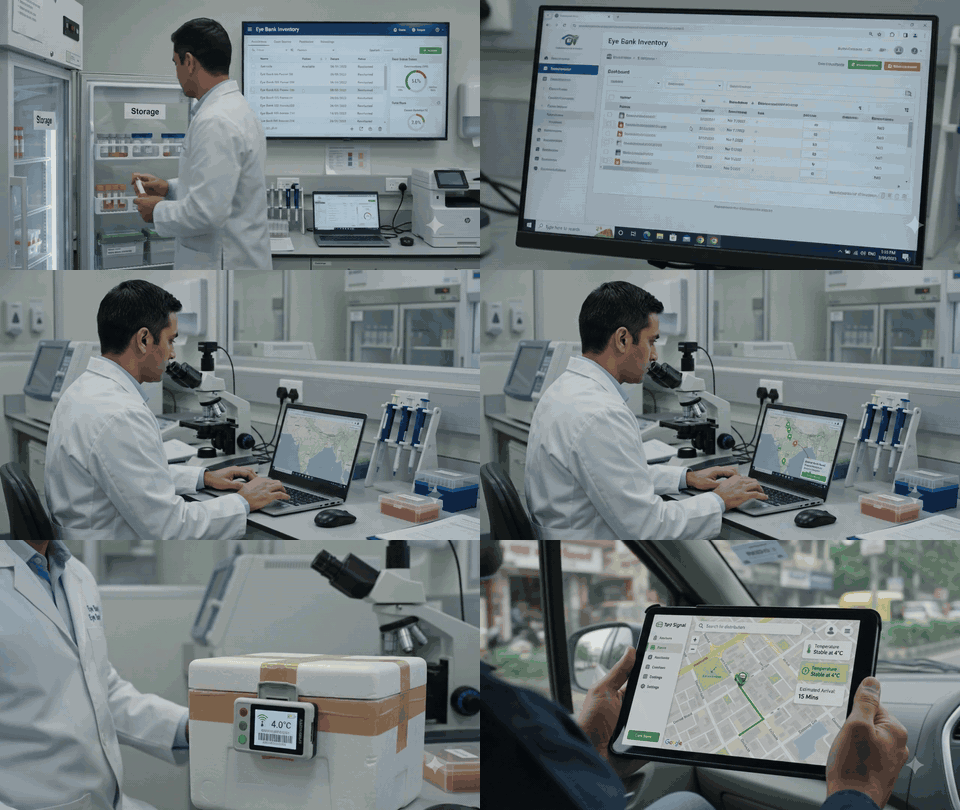
- Eye bank operations — live inventory, storage and expiry, expiring tissue first
- Universal Cornea Distribution System — one national inventory; tissue matched on clinical urgency, grade and transit time, with an auditable waiting list
- Cold chain tracking — every cornea scanned out, tracked in transit and scanned in
Transplant and aftercare
- Transplant record — surgery details logged against the tissue used
- Project Sarathi — follow-up schedule, reminders and rescheduling for every patient
- Local doctor connect — graft findings shared with the operating surgeon
- Cornea registry — outcomes that close the loop for policy and quality
Pledge
Consent
Retrieve
Evaluate
Store
Match
Ship cold
Graft
Follow up
Every cornea is traceable from consent to graft outcome.
For eye banks
One digital record for every cornea, with inventory, expiry and quality in view. Banks on the network can place surplus tissue anywhere, so collection is always worth doing.
For surgeons
Request tissue from the national inventory, see its grade before it ships, and track it to the operating room.
For patients
Tissue allocated by need, not by who you know, and follow-up that continues close to home after surgery.
Sustained care after transplant
A transplant is the start of care, not the end.Without support, follow-up falls away in the years after surgery, often because patients live far from the hospital. Rejection caught late is a graft lost.
- Project Sarathi: every transplant patient is enrolled and actively tracked.
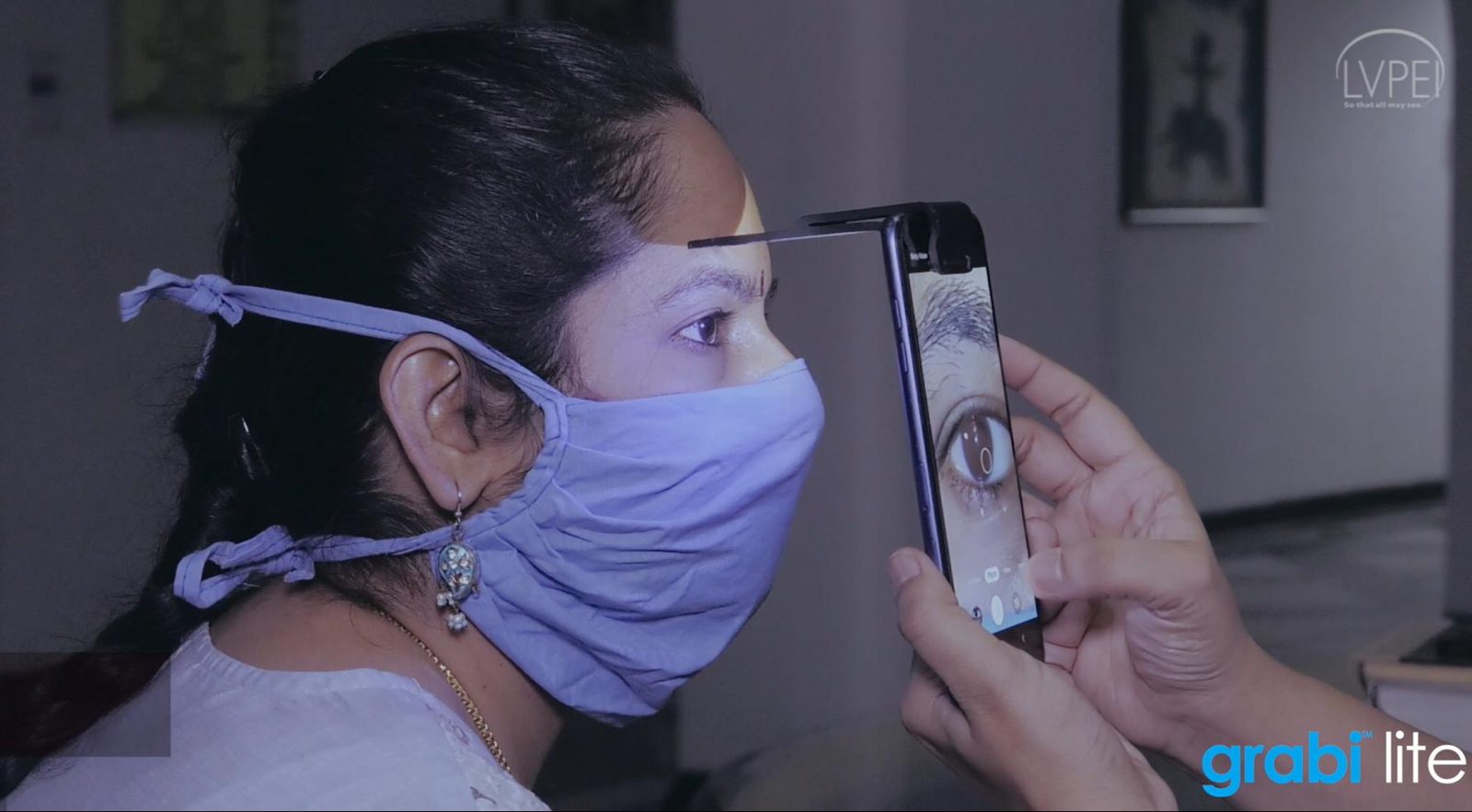
- Keratoplasty ChatMate: a multilingual chatbot that collects symptoms, analyses eye photos, reminds patients about medicines, links to their medical record and directs them to the nearest hospital.
- Cornea graft specialists: trained local eye doctors who see transplant patients near home, with remote support from the operating surgeon.
Training the workforce
Training is how every track is delivered. The national training programme reaches every cadre, from community health workers to cornea surgeons. Read more on the Network page →
Digital public infrastructure
One record links each patient, each cornea and each outcome. Our platforms, including SightConnect, the distribution system, tele-ophthalmology, the follow-up platform and a national cornea registry, are built to be used by any institution, not just our partners.
A national network, built on what already exists.
UCCM does not build a parallel system. India’s leading eye care institutions set the standard, train and certify; the public health system, from regional institutes and AIIMS to medical colleges and district programmes, carries care and training to every state.
Partner institutions
| Institution | City | Zone |
|---|---|---|
| Aravind Eye Care System | Madurai | South |
| CL Gupta Eye Institute | Moradabad | North |
| Dr Shroff’s Charity Eye Hospital | Delhi | North |
| Eye Bank Coordination and Research Center | Mumbai | West |
| L V Prasad Eye Institute | Hyderabad | South |
| M M Joshi Eye Institute | Hubli | South |
| MGM Eye Institute | Raipur | Central |
| Narayana Nethralaya | Bengaluru | South |
| Sankara Nethralaya | Chennai | South |
| Shantilal Shanghvi Eye Institute | Mumbai | West |
| Vittala International Institute of Ophthalmology | Bengaluru | South |
Partner logos
Every cadre, each trained for a service they will deliver.
UCCM trains people across every cadre, from community health workers and vision technicians to general ophthalmologists and cornea surgeons.
Project ECHO is the backbone
Fortnightly online case-based sessions over 12 months reach doctors where they already work, at a fraction of the cost of residential training. The curriculum for residents and optometrists is already written.
Hybrid observerships
Mostly online with a short stay on site, so practitioners don’t have to leave their practice for long.
Become a partner
We work with eye hospitals, eye banks, medical colleges, state governments, technology partners and funders. Partners receive equipment, platforms, training and funded posts; in return they commit to shared targets and report on them.
More transplants, more patients treated, more people screened, every year.
By 2031, UCCM aims to be active across India. We will publish our numbers as the programme reports them.
Why prevention pays
The earlier we act, the less it costs and the more sight we save. Preventing one case of corneal blindness can cost a fraction of what it costs to treat it with a transplant.
Estimates. Transplant: trust-hospital rates. Infection: medication costs from Indian J Ophthalmol 2022;70(6), extended to a full episode. Prevention: planning estimate.
What the training programme delivers by 2031
- Cornea competence becomes standard in ophthalmology training. Every graduating ophthalmologist can recognise a corneal ulcer, scrape it and refer.
- A working corneal service in every district. General ophthalmologists trained in common corneal disease and transplant follow-up.
- Detection moves into the community. Community health workers and vision technicians screening and referring.
- Surgical capacity grows with tissue supply. More surgeons trained in modern transplant techniques, matched to the corneas available.
- Eye banking professionalised end to end. Counsellors, technicians and managers trained for every eye bank in the network.
How we measure
We count what changes for patients, not just activity. Every partner reports the same indicators each financial year, defined the same way.
- Patients with corneal disease seen, and corneal surgeries and transplants performed
- Ocular samples processed in microbiology
- Donor corneas collected and distributed, and transplant requests fulfilled on time
- People screened, disease identified, and referrals completed
- Transplant patients still in follow-up, and grafts that survive
- For training: whether trainees use their new skills, where they are deployed, and what happens to their patients
Four ways to help someone see again.
Pledge your eyes
One donor can restore sight to two people. Eye donation happens only after death, is quick, does not disfigure the face and does not delay funeral rites. People of any age, including those who wear glasses or have had cataract surgery, can donate.
The most important step is telling your family: their consent is what makes donation possible.
Train with us
For ophthalmologists, residents, optometrists, technicians and eye bank staff. Join a Project ECHO series from your own clinic, attend a mobile wet-lab session at your medical college, or take a hybrid observership at a partner institute.
Partner with us
For eye hospitals, eye banks, medical colleges and state governments that want to strengthen cornea care in their region. Tell us what you do today and where you want to grow.
Fund the mission
For foundations and CSR partners. UCCM is built to outlast its funding: every rupee goes into systems, from platforms and protocols to trained people and policy, that keep working after the programme ends.
Contact
UCCM Foundation · address · phone
General enquiries: info@uccm.org
Need help after a corneal transplant? Call Nethra: 18002002211